One of the most rewarding experiences of dog ownership is training your dog. It not only promotes safety and enhanced communication, but it also fosters a deeper bond between you and your pet. You might have a new puppy or an older adopted dog, but instilling basic commands puts organization into their lives and enhances conduct. This blog explores the basic training principles and the commands that every dog needs to know.
Table of Contents
Why Dog Training is Important
Essential Commands Every Dog Should Know. Training is not merely having your dog sit or stay. It is establishing boundaries, establishing trust, and establishing a common language between you and your dog. A well-trained dog is less of a handful, safer around other people, and just overall more confident and content. Further, dogs feel better when they understand what is expected of them.
Some key benefits of training include:
- Improved behavior both at home and in public.
- Enhanced safety for your dog and others.
- Easier socialization with people and other pets.
- Stronger bond and mutual respect between owner and dog.
- Mental stimulation that keeps dogs active and engaged.
Training Basics for All Dog Owners
Essential Commands Every Dog Should Know. Before diving into specific commands, it’s important to understand the foundational elements of effective dog training:
1. Consistency is Key
Dogs learn best when they receive the same cues and rewards every time. Use the same words, tone, and gestures consistently.
2. Positive Reinforcement
Essential Commands Every Dog Should Know. Reward your dog with treats, praise, or playtime whenever they perform a desired behavior. This encourages repetition of good behavior without fear or confusion.
3. Short Training Sessions
Essential Commands Every Dog Should Know. Dogs, especially puppies, have short attention spans. Keep sessions between 5–15 minutes, and always end on a positive note.
4. Patience and Persistence
Training takes time. Be patient and stay calm, even if your dog doesn’t understand a command right away.
5. Avoid Punishment
Essential Commands Every Dog Should Know. Harsh corrections or yelling can damage the trust between you and your dog. Instead, redirect unwanted behavior and reward the correct action.
10 Essential Commands Every Dog Should Know
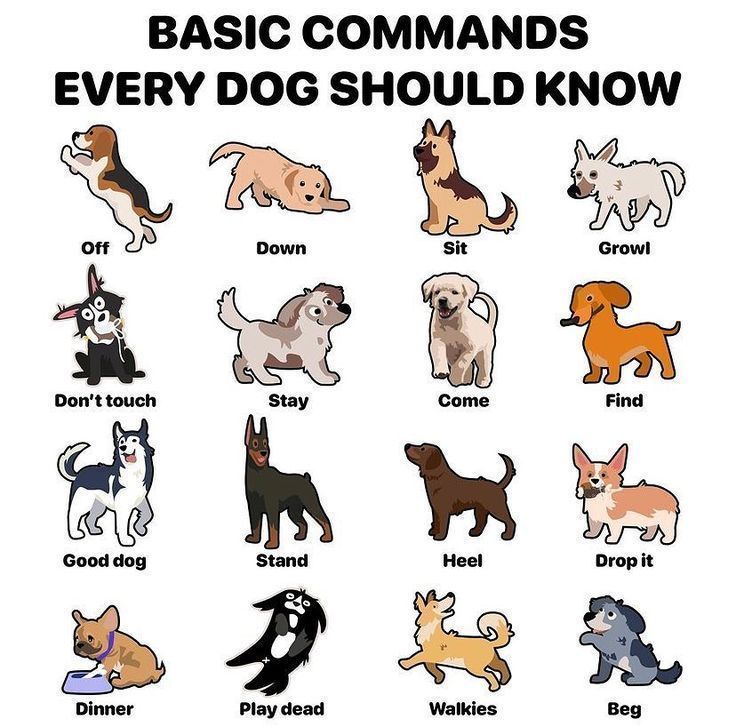
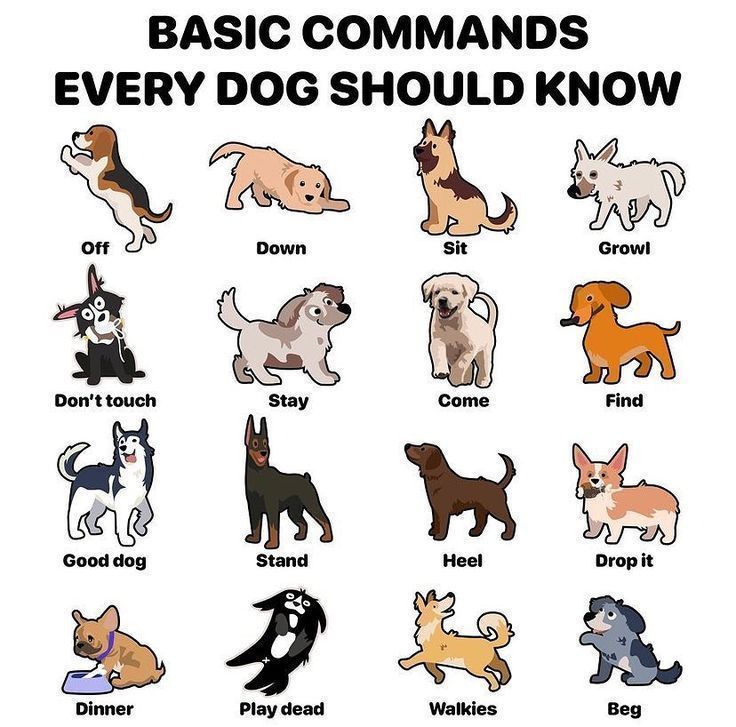
These core commands lay the groundwork for a well-behaved dog. Mastering them can prevent accidents, reduce stress, and make everyday life smoother for both of you.
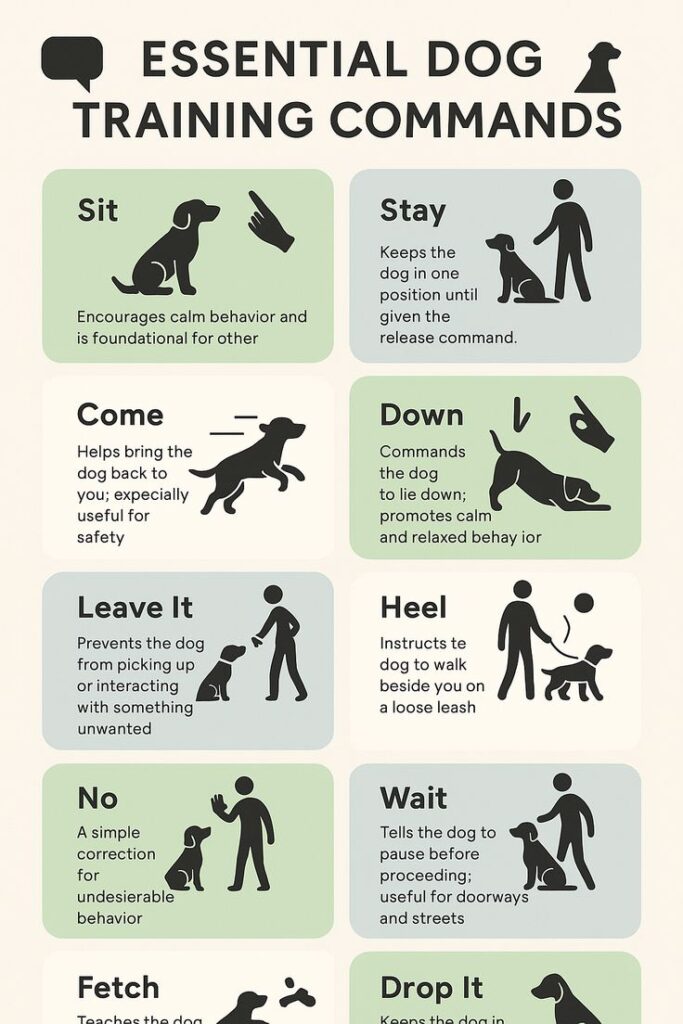
1. Sit
Purpose: A foundational command that teaches your dog to remain still and attentive.
How to Teach:
Hold a treat near your dog’s nose and slowly move it upward. As their head follows, their bottom will naturally lower. Once they sit, say “Sit,” give the treat, and offer praise.
Usage: Useful during greetings, before crossing roads, or during feeding time.
2. Stay
Purpose: Teaches your dog to remain in place until released.
How to Teach:
Ask your dog to sit. Hold your hand out like a stop sign and say “Stay.” Take one step back. If they stay, reward them. Gradually increase the distance and duration.
Usage: Prevents your dog from running into danger or jumping on guests.
3. Come
Purpose: Encourages your dog to return to you on command, especially in off-leash situations.
How to Teach:
Put your dog on a long leash. Say “Come” in an excited tone and gently pull them toward you. Reward and praise when they reach you.
Usage: Crucial for off-leash control, safety, and recall in busy areas.
4. Down
Purpose: Encourages calm behavior and submission.
How to Teach:
With your dog sitting, hold a treat in your hand and lower it to the ground. Say “Down” as your dog follows it. Once fully down, reward and praise.
Usage: Helps during mealtimes, when guests arrive, or when calming an overexcited dog.
5. Leave It

Purpose: Prevents your dog from picking up dangerous or unwanted items.
How to Teach:
Place a treat in one hand and show it to your dog while saying “Leave it.” When they stop trying to get it, reward them with a treat from the other hand.
Usage: Useful during walks or in the home to avoid harmful objects.
6. Drop It
Purpose: Teaches your dog to release objects from their mouth.
How to Teach:
Give your dog a toy, then offer a treat while saying “Drop it.” When they let go, give the treat and praise.
Usage: Essential if your dog grabs something dangerous or you want them to stop playing with a certain item.
7. Heel
Purpose: Keeps your dog walking beside you rather than pulling ahead.
How to Teach:
With a leash, say “Heel” and begin walking. Reward your dog for staying by your side. If they pull, stop walking until they return to your side.
Usage: Makes walks more enjoyable and prevents leash-related accidents.
8. Watch Me
Purpose: Gets your dog’s attention quickly, especially in distracting environments.
How to Teach:
Hold a treat near your face and say “Watch me.” When your dog makes eye contact, reward and praise.
Usage: Useful for focus during training or redirecting attention.
9. Wait
Purpose: Tells your dog to pause temporarily, different from “Stay” (which means not to move at all).
How to Teach:
Say “Wait” at the door or before a meal. Open the door or present the food but don’t allow access until you release with “OK.”
Usage: Prevents bolting out of doors or snatching food.
10. No
Purpose: A general cue to stop undesired behavior.
How to Teach:
Use a firm, calm voice when saying “No.” Redirect your dog’s attention to an appropriate behavior and reward that instead.
Usage: Stops unwanted behavior like chewing, barking, or jumping.
Tips for Long-Term Training Success

- Practice in Different Environments: Train at home, in the park, and during walks to generalize the commands.
- Gradually Reduce Treats: Shift to praise and affection as rewards over time to prevent treat dependency.
- Use a Clicker: Clicker training helps reinforce the exact moment your dog does something right.
- Enroll in Obedience Classes: Especially useful for first-time dog owners or challenging breeds.
Conclusion
Training your dog with basic commands isn’t all about control—it’s about communication, safety, and trust. By taking the time and effort to train your dog, they don’t just become a pet—you get a well-mannered friend that you can bring anywhere and count on in any situation.
Take it slow, be patient, and have fun working towards a tighter relationship with your dog through proper training. And don’t forget, a well-trained dog is a happy dog—and a happy owner as well.