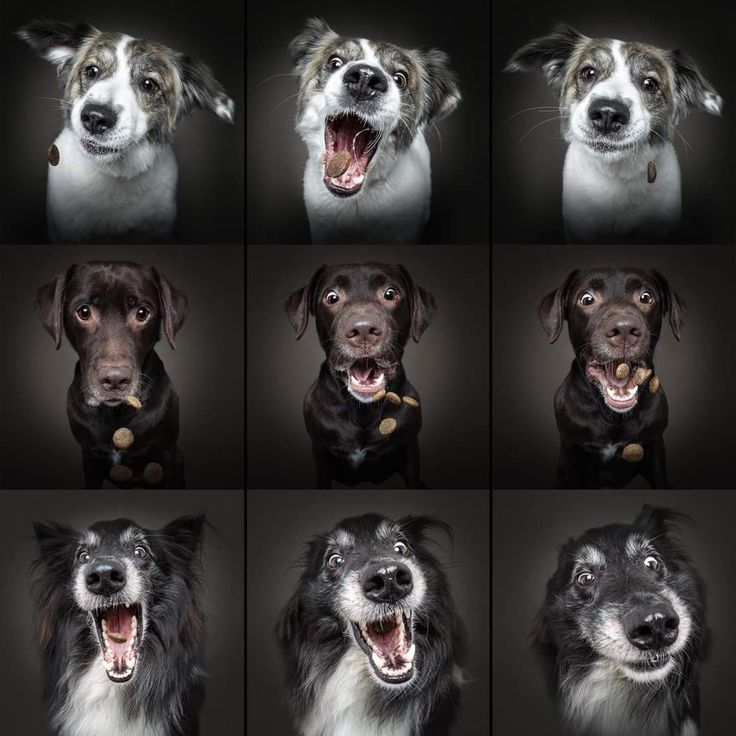
How Dogs Perceive the World Dogs are our closest animal companions, but the way they experience the world is vastly different from ours. While humans rely heavily on sight to understand their environment, dogs depend more on their senses of smell and hearing. Their perception is shaped by unique biological adaptations that allow them to detect things far beyond our capacity. Understanding how dogs see, hear, and smell gives us a glimpse into their fascinating world and helps us build stronger connections with them.
Table of Contents
Vision: Seeing Through a Dog’s Eyes
When you look into your dog’s eyes, you might wonder: do they see the world the same way you do? The answer is both yes and no. Dogs can see, of course, but their vision differs from humans in several important ways.
Color Perception
Humans possess three kinds of color receptors (cones) in the eyes, and that enables us to perceive a vast spectrum of colors, ranging from red to violet. But dogs possess only two types of cones, so they are dichromatic. This restricts the ability of dogs to differentiate between some colors. For instance, whereas humans perceive a rainbow of red, orange, yellow, green, blue, indigo, and violet, dogs can see mainly shades of yellow and blue. Reds and greens only register as dull tones of brown or gray.
This doesn’t imply their eyesight is bad—it’s simply different. A red toy on the green grass may go unseen to us, but a dog can still spot it because of contrast and movement instead of color.
Night Vision
One area where dogs excel over humans is low-light vision. Their eyes have more rod cells (which detect light and motion) than ours, making them particularly good at seeing in dim environments. Additionally, they possess a reflective layer behind the retina called the tapetum lucidum, which reflects light back through the eye. This adaptation helps them see better at night and is the reason their eyes often glow in the dark when light hits them.
Motion Detection and Field of View

How Dogs Perceive the World Dogs are excellent at detecting motion—even the slightest movement from far away. Their eyes are positioned more toward the sides of their heads than ours, giving them a wider field of view (about 240 degrees compared to our 180 degrees). While this reduces depth perception slightly, it allows dogs to be more aware of their surroundings, which was crucial for survival in the wild.
Hearing:
If dogs don’t see the world quite like we do, their sense of hearing more than makes up for it.How Dogs Perceive the World Dogs have an exceptional ability to detect sounds that humans cannot.
Frequency Range
Humans can hear frequencies between roughly 20 Hz and 20,000 Hz. Dogs, on the other hand, can hear up to about 65,000 Hz. This means they can detect much higher-pitched sounds, such as the ultrasonic frequencies produced by small animals or specialized training whistles that are silent to us.
Ear Structure and Mobility
A dog’s ears are a wonder of engineering. With as many as 18 muscles that operate each ear, dogs can tilt, rotate, and raise their ears individually in order to receive sound more easily. This gives them the ability to locate where a sound is coming from in a hurry and with ease.
Consider how a dog responds when hearing something in the distance—a car coming up the driveway, the rustle of a treat package, or even footsteps at the door. Before you can even sense anything, your dog already has picked up on them.
Sensitivity to Sounds
How Dogs Perceive the World Dogs also hear at much greater distances than we do. While a human might detect a normal conversation from about 20 feet away, dogs can hear it from much farther. This heightened sensitivity explains why some dogs become anxious around fireworks, thunderstorms, or household appliances. The sounds may be amplified to them in ways we can’t imagine.
Smell: The Canine Superpower

While their vision and hearing are impressive, it’s the sense of smell that truly defines how dogs perceive the world. To a dog, scent is what vision is to humans—the primary way of interpreting their surroundings.
Anatomy of the Nose
A dog’s nose is an extraordinary tool, equipped with up to 300 million olfactory receptors, compared to about 5–6 million in humans. The part of a dog’s brain dedicated to processing smells is about 40 times larger than ours relative to brain size. This allows them to separate and identify scents with incredible accuracy.
The Power of Scent Detection
To put it in perspective, dogs can detect some odors at concentrations as low as one part per trillion. How Dogs Perceive the World That’s like identifying a single drop of liquid in 20 Olympic-sized swimming pools. This is why dogs are employed in roles such as search and rescue, detecting drugs, explosives, and even medical conditions like diabetes or cancer.
Layered Smelling
How Dogs Perceive the World Dogs smell in layers, much like humans see in colors. While we might notice a stew simmering and recognize a general aroma, a dog can distinguish each ingredient—carrots, meat, spices—individually. When they sniff a person, they’re not just smelling soap or shampoo; they’re learning about where that person has been, what they ate, and even their emotional state.
The Role of the Jacobsen’s Organ
Dogs also have a specialized organ called the vomeronasal organ (or Jacobsen’s organ) that helps them detect pheromones—chemical signals related to communication, reproduction, and emotion. This allows dogs to sense things like fear or stress in other animals and even in humans.
How These Senses Work Together

Dogs don’t rely on just one sense at a time—they use a combination of vision, hearing, and smell to form a complete picture of the world. For example:
- On a walk, your dog might first hear a squirrel rustling in the leaves, then smell its scent trail, and finally spot it moving.
- At home, a dog can recognize you not just by sight but by your unique scent and the sound of your footsteps.
- In social interactions with other dogs, they rely heavily on smell but also use sight and hearing to interpret body language and vocalizations.
Together, these senses provide dogs with a richer, more layered perception of their environment than we could imagine.
Appreciating the Canine Perspective
Understanding how dogs perceive the world helps us appreciate them more deeply and improve the way we interact with them. A few takeaways:
- Since dogs rely heavily on smell, allow them time to sniff during walks—it’s their way of gathering information.
- Recognize that loud noises may be overwhelming for them, and provide comfort or safe spaces when fireworks or storms occur.
- Use toys and activities that engage multiple senses, such as scent-based games or puzzle feeders, to keep them mentally stimulated.
Conclusion
Dogs inhabit a sensory-rich environment in which scents narrate, noises divulge secrets, and sight records motion and contrast. Though their perception is different from our own, it is no less rich and significant—indeed, often better calibrated to survival and communicatiojn. By learning to observe, listen, and sniff the world like a dog, we don’t just gain a better appreciation for what they can do but also learn how to care for and connect with them better.